
Horse Groundwork: Building Trust and Responsiveness From the Ground
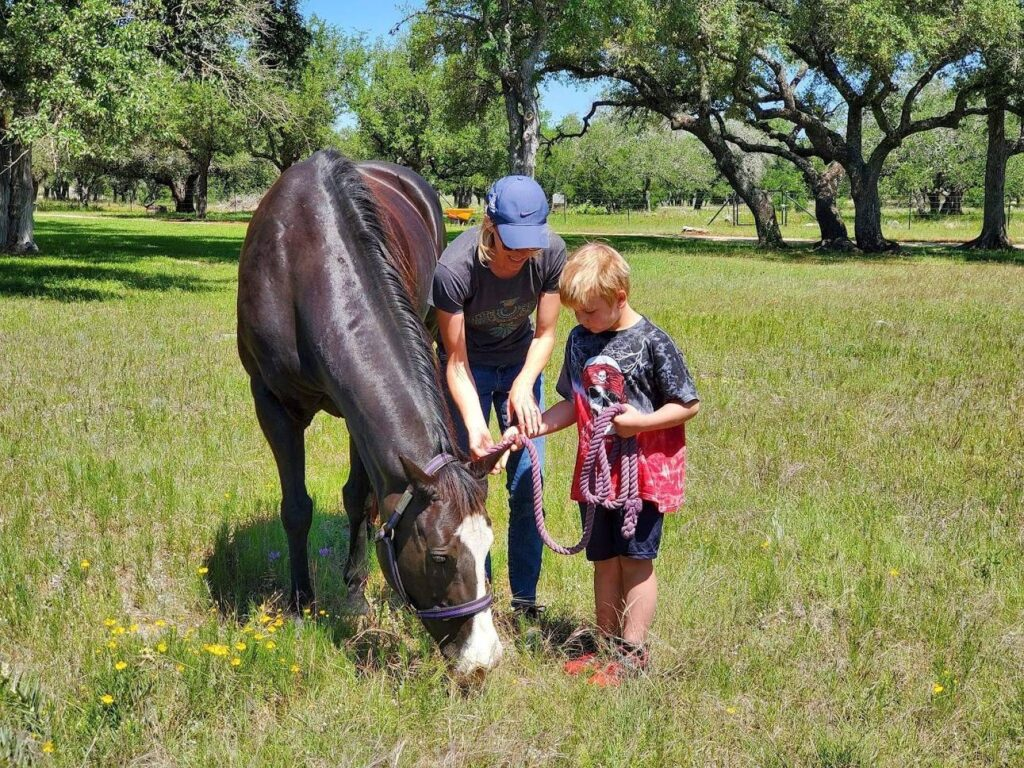
Horse groundwork includes training exercises performed while the handler remains on the ground rather than riding the horse. These exercises can help improve communication, manners, responsiveness, confidence, and safety.
Groundwork can be valuable for young horses, experienced riding horses, horses returning to work, and handlers who want to strengthen their relationship with their horse.
At Never Done Farm, we view groundwork as an important part of a balanced horse-training program.
What Is Horse Groundwork?
Groundwork includes a wide variety of exercises.
Common examples include leading, backing, yielding the hindquarters, moving the shoulders, standing quietly, responding to voice cues, and navigating simple obstacles.
Some handlers also incorporate lunging or long-lining, although these exercises require additional skill and suitable equipment.
The purpose of groundwork is not simply to make the horse move. Instead, it teaches the horse to pay attention to the handler and respond appropriately to clear cues.
Start With Personal Space
A horse should learn to respect the handler’s personal space.
This does not mean making the horse fearful. Instead, the horse should understand where to stand and how to move without crowding, pushing, or walking into the handler.
Leading exercises are useful for establishing this boundary.
Practice walking, stopping, changing direction, and backing while maintaining a safe position beside the horse.
Teach the Horse to Yield
Yielding exercises teach horses to move specific parts of their body in response to pressure or body language.
For example, the horse may be asked to move its hindquarters away while keeping its front feet relatively still.
The handler may later work on moving the shoulders or asking the entire horse to step sideways.
Use light cues first and release them when the horse responds correctly.
Over time, horses may learn to respond to increasingly subtle signals.
Introduce Obstacles Gradually
Groundwork can also help develop confidence around unfamiliar objects.
Poles, cones, tarps, gates, or other safe obstacles can be introduced gradually.
Never force a frightened horse directly toward something it considers threatening. Give the horse time to investigate while maintaining safe control.
Confidence exercises should be challenging enough to encourage learning without overwhelming the horse.
Use Groundwork Before Riding
Groundwork can be useful before mounting.
A brief session may allow the handler to assess the horse’s attention, energy, movement, and responsiveness.
If the horse is unusually distracted, stiff, uncomfortable, or difficult to control from the ground, those observations may influence whether ridden work is appropriate that day.
Ground exercises may also reinforce cues later used under saddle.
Avoid Turning Groundwork Into Endless Drilling
Repetition helps horses learn, but excessive drilling can lead to boredom or frustration.
Keep exercises purposeful and change activities when the horse demonstrates a reliable understanding.
Training should focus on quality responses rather than simply repeating an exercise many times.
Horse groundwork is ultimately about communication. By teaching horses to lead, yield, back, stand, and respond calmly, handlers can establish useful skills that support everyday management and riding.
For more equestrian training, horse-care information, and practical farm guides, visit the Never Done Farm homepage.