
Horse Care: Practical Tips for Keeping Horses Healthy and Happy
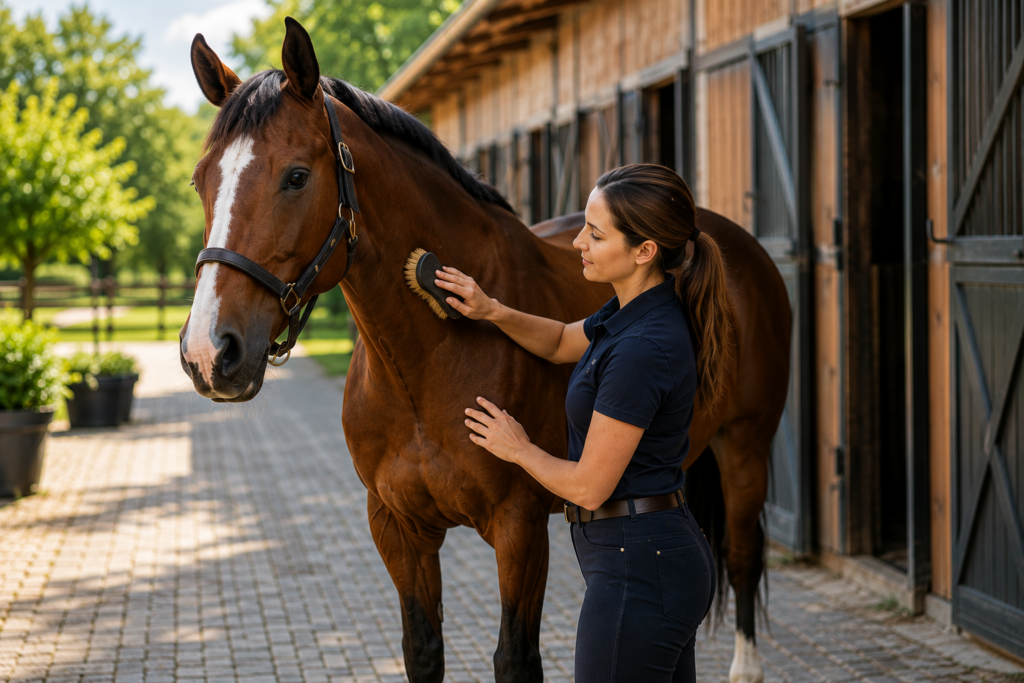
Caring for a horse involves much more than providing food, water, and shelter. Good horse care combines proper nutrition, regular grooming, exercise, preventive health management, and a safe living environment. At Never Done Farm, we believe that understanding a horse’s everyday needs is one of the most important parts of responsible ownership.
Whether you care for one horse or manage several, developing a consistent routine can make it easier to identify changes in behavior, appetite, movement, or general condition before they become serious problems.
Build a Consistent Horse Care Routine
Horses generally thrive on consistency. Feeding, turnout, exercise, grooming, and stable maintenance should follow a predictable routine whenever possible.
Daily horse care should include checking that your horse has access to clean drinking water, appropriate forage, and a safe environment. Take a few moments to observe how the horse is standing, walking, eating, and interacting with other horses.
Small changes may provide early clues that something needs attention.
Regular grooming is also valuable. Brushing removes dirt and loose hair while giving you an opportunity to inspect the coat and skin for cuts, swelling, irritation, or unusual sensitivity.
Provide Appropriate Nutrition
Nutrition is a major part of effective horse care. Forage such as grass and hay normally forms the foundation of a horse’s diet. Additional feeds may be appropriate depending on the horse’s age, workload, body condition, and nutritional requirements.
Changes to feeding programs should normally be introduced gradually.
Horse owners should also consider the quality of available forage and ensure that feed is stored properly to protect it from moisture, contamination, and pests.
Our Horse Nutrition section explores feeding practices, forage, supplements, hydration, and other considerations in greater detail.
Support Exercise and Movement
Regular movement helps horses maintain fitness, mobility, and mental stimulation. The appropriate amount of exercise depends on the individual horse.
A competition horse may follow a structured conditioning program, while a recreational horse may receive most of its movement through turnout, trail riding, groundwork, and regular riding.
Exercise areas should provide suitable footing and be checked for hazards.
Keep the Stable and Pasture Safe
Good stable management is an important element of horse care. Stalls should be kept reasonably clean and dry, while fences, gates, water sources, feeding areas, and pasture should be inspected regularly.
Remove broken equipment, exposed wire, sharp edges, poisonous plants, or other potential hazards whenever they are identified.
Good ventilation is especially important in enclosed barns because dust and poor air circulation can affect the stable environment.
Make Preventive Health Care a Priority
Regular veterinary and hoof-care attention helps support long-term equine health. Horse owners should work with appropriate professionals to establish schedules for vaccinations, dental examinations, parasite management, hoof trimming, and other preventive care based on the horse and local conditions.
You can learn more in our Health & Wellness section.
Horse care is ultimately about paying attention to the individual animal. No two horses have exactly the same requirements.
Explore more equestrian advice, training information, farm-life resources, and practical guides from Never Done Farm.