
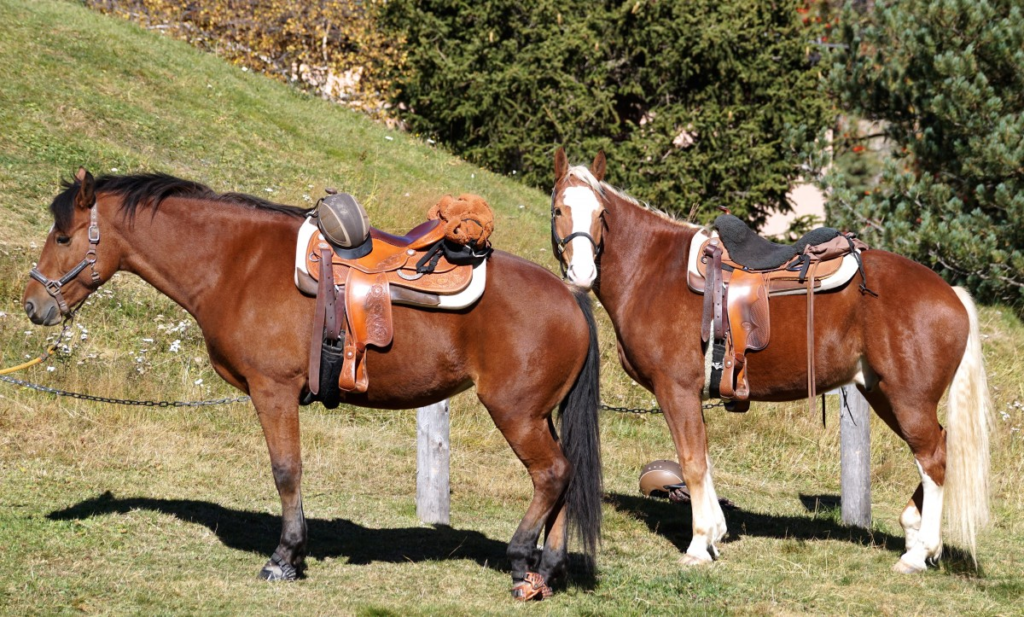
Saddles & Tack: Choosing Equipment for Horse and Rider
Saddles and tack form the connection between horse and rider during many equestrian activities. Correctly selected and fitted equipment can support comfort, communication, balance, and safety, while unsuitable or poorly maintained tack may interfere with a horse’s movement or create unnecessary discomfort.
Understanding the basic pieces of tack and how they should be maintained is therefore an important skill for horse owners and riders.
Understanding Horse Tack
The term “tack” commonly refers to equipment used when handling or riding horses.
Typical items include:
- Saddles
- Bridles
- Bits
- Girths
- Reins
- Stirrups
- Breastplates
- Martingales
- Saddle pads
The equipment required depends on the horse, rider, discipline, and level of training.
Not every horse requires every piece of equipment.
Choosing a Saddle
Saddles are available for different disciplines, including general-purpose riding, dressage, jumping, western riding, endurance, and other equestrian activities.
The saddle should fit both horse and rider.
A horse’s back shape can change because of age, conditioning, weight changes, muscle development, and workload. A saddle that previously fitted correctly may therefore need reassessment over time.
Professional saddle-fitting advice can be valuable when choosing or adjusting a saddle.
Bridles and Bits
A bridle should sit comfortably around the horse’s head without excessive pressure.
Check the browband, cheek pieces, noseband, throat area, and bit position. Equipment should not pinch sensitive areas or interfere unnecessarily with normal movement.
Bits are available in many designs, but stronger equipment is not necessarily the answer to training difficulties.
Consider the horse’s education, mouth structure, rider experience, and intended activity when selecting a bit.
Inspect Your Tack
Tack should be inspected before riding.
Pay particular attention to:
- Stirrup leathers
- Girth straps
- Billets
- Reins
- Buckles
- Stitching
- Leather around pressure points
Small cracks or damaged stitching can eventually develop into significant equipment failures.
Leather tack should be cleaned and conditioned appropriately, while synthetic equipment should be maintained according to its manufacturer’s instructions.
Store Tack Properly
Good storage can extend the usable life of equestrian equipment.
Keep tack somewhere dry, clean, and reasonably well ventilated. Avoid leaving wet equipment stored in enclosed spaces for extended periods.
Saddles should ideally be supported properly rather than placed where their structure could be distorted.
Helmets, boots, grooming supplies, and other equipment should also have dedicated storage areas.
For a broader overview of equipment used around horses, visit our Horse Gear & Equipment guide.
Correct tack should promote comfortable communication rather than forcing a horse into a particular response. Combine well-fitted equipment with appropriate training, observation, and regular horse care.